
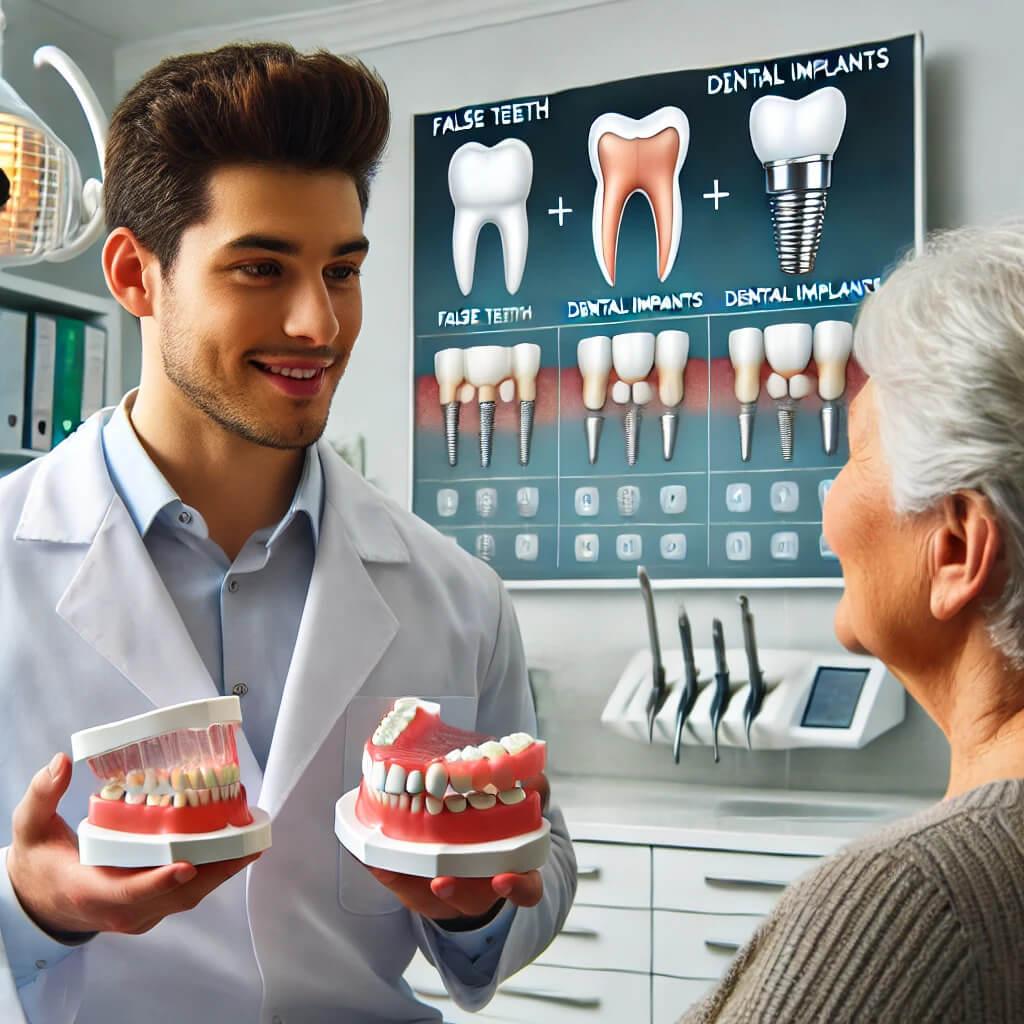
Are you undecided between choosing false teeth or dental implants? In this article, we will delve into the pros and cons of each option to help you make an informed decision.
We’ll discuss the difficulties of living with false teeth, the limitations they can present, and the potential discomfort they can cause.
Next, we’ll explore the advantages of dental implants, such as their natural look and feel, their long-term durability, and how they can improve your oral health and confidence.
By the end of this article, you will have a clear understanding of which option best aligns with your lifestyle, budget and dental health goals, allowing you to make the right decision to effectively restore your smile.
Table of Contents
False Teeth or Dental Implants
How Do Dental Implants Work?
Dental implants work by placing a titanium post into the jawbone, which acts as an artificial tooth root. This post fuses with the bone through a process called osseointegration, providing a stable foundation.
After healing, an abutment is attached to the post, and a custom-made crown, bridge, or denture is placed on top. This process ensures implants look, feel, and function like natural teeth, with a success rate of about 95% .
| Step | Description |
| Initial Consultation | Assessment of oral health, bone density, and suitability for implants. |
| Implant Placement | Surgical insertion of a titanium post into the jawbone. |
| Healing and Osseointegration | Bone grows around the implant, securing it in place (3-6 months). |
| Abutment Placement | Connector piece attached to the implant post. |
| Crown Placement | Custom-made crown attached to the abutment, completing the restoration. |
Recommended Reading: What are the 3 Stages Of Dental Implants
How to Know if You Need Dental Implants?
You might need dental implants if you have one or more missing teeth, your dentures are uncomfortable, or you have difficulty chewing. Dental implants are ideal for those with healthy gums and adequate bone to support the implant.
Approximately 69% of adults aged 35-44 have lost at least one permanent tooth, highlighting the common need for implants. Consult with a dental professional to determine your suitability based on your oral health and specific needs.
| Indicator | Description |
| Missing Teeth | One or more teeth missing, affecting function and appearance. |
| Uncomfortable Dentures | Dentures causing discomfort, slipping, or sore spots. |
| Difficulty Chewing or Speaking | Trouble chewing food properly or speaking clearly due to missing teeth. |
| Adequate Bone Density | Sufficient bone in the jaw to support an implant; determined by a dental professional. |
| Healthy Gums | Gums in good condition, free from periodontal disease. |
| Long-term Tooth Replacement Needed | Seeking a permanent solution with a high success rate (around 95%) for missing teeth. |
Recommended Reading: When is it Too Late to Get Dental Implants
What is a False Teeth?
False teeth, also known as dentures, are prosthetic devices designed to replace missing teeth.
They are typically made from acrylic resin or metal and come in two types: removable dentures, which can be taken out and put back in, and fixed dentures, which are anchored by dental implants for greater stability.
How do False Teeth Work?
False teeth, or dentures, work by replacing missing teeth with artificial ones. Removable dentures can be taken out and put back in, consisting of a gum-colored acrylic base with artificial teeth.
Fixed dentures are anchored in place by dental implants, offering more stability and comfort.
| Aspect | Description |
| Removable Dentures | Can be taken out and put back in; consist of a gum-colored base with artificial teeth; partial dentures attach to existing teeth with metal clasps. |
| Fixed Dentures | Anchored by dental implants; provide better stability and comfort, preventing slipping and irritation. |
| Adhesives and Fittings | Adhesives ensure a snug fit; regular adjustments maintain proper fit as the mouth changes shape. |
How to Know if You Need False Teeth?
Knowing whether you need false teeth involves considering several signs and circumstances:
| Aspect | Description |
| Severe Tooth Decay or Damage | When multiple teeth are beyond repair and extraction is necessary. |
| Missing Teeth | Significant gaps that impact chewing or speaking. |
| Gum Disease | Advanced periodontal disease leading to tooth loss. |
| Difficulty Chewing or Speaking | Struggles with eating or articulation due to missing or damaged teeth. |
| Self-Consciousness About Appearance | Feeling insecure about missing teeth affecting confidence and smile. |
Full check-up with a full set of X-rays
- Cannot be combined with other coupons or promotions
- Only on full priced items
Difference Between Dental Implants and False Teeth
Dental implants are permanent solutions that involve surgically placing a titanium post into the jawbone, acting as a root for a replacement tooth.
False teeth, or dentures, are removable appliances that rest on the gums and can be taken out and cleaned daily.
| Aspect | Dental Implants | False Teeth (Dentures) |
| Durability | Lifetime with proper care | Replacement every 5-10 years |
| Comfort | Fixed, no slipping; natural feel | May slip, require adhesives |
| Functionality | Better chewing and speech | Less efficient, can affect chewing and speech |
| Aesthetics | Preserve jawbone, natural appearance | May alter facial structure over time |
| Cost | $3,000 – $5,000 per tooth | $1,000 – $3,000 for complete set |
| Maintenance | Regular brushing, flossing, check-ups | Daily cleaning, soaking, adjustments |
In summary, dental implants offer a permanent, comfortable, and aesthetically pleasing solution but at a higher cost. False teeth are more affordable and accessible but require more maintenance and may not provide the same level of comfort or functionality.
Recommended Reading: Dental Implants vs Veneers
Pros and Cons of Dental Implants vs False Teeth
Dental implants offer a permanent, natural-feeling solution with bone health benefits, but require surgery and are costlier. False teeth (dentures) are affordable, easy to adjust, but may lack stability and long-term bone preservation. Choosing depends on preference, cost, and health needs.
| Aspect | Dental Implants | False Teeth (Dentures) |
| Permanent Solution | Integrates with the jawbone for long-term stability. | Removable and replaceable, not permanently fixed. |
| Natural Feel | Look and feel like natural teeth, providing comfort. | May feel less natural and can move or shift. |
| Bone Health | Stimulates bone growth and prevents bone loss. | Does not prevent bone loss; may lead to jawbone deterioration. |
| Durability | Can last a lifetime with proper care. | Requires periodic replacement due to wear and tear. |
| Stability | Fixed in place and do not move or slip. | May shift or become loose, especially over time. |
| Maintenance | Easy to clean, like natural teeth. | Requires removal and cleaning separately from natural teeth. |
| Eating Comfort | Allows for normal chewing function. | May restrict certain foods; can affect taste sensation. |
| Speech | Does not affect speech; feels natural. | May affect speech initially; adjustment period required. |
| Cost | Higher initial cost; long-term cost-effectiveness. | More affordable upfront; ongoing maintenance costs. |
| Procedure | Surgical placement; healing time required. | Non-surgical fitting; adjustment period for comfort. |
| Adaptability | Can be customized to match natural teeth. | Customizable but may not fully replicate natural teeth. |
Recommended Reading: Dental Implant vs Crown
Average Price of Dental Implants in Kendall, Miami
Generally, the cost for a single dental implant ranges from $3,000 to $5,000. This includes the implant, abutment, and crown.
- Single Implant: $3,000 – $5,000
- Multiple Implants: Costs can rise significantly if multiple implants are needed, potentially reaching $25,000 or more for full mouth reconstruction.
- Additional Procedures: Procedures like bone grafting or sinus lifts, if required, can add $500 to $2,000 to the overall cost.
Insurance coverage and financing options can also impact the out-of-pocket expenses. It’s essential to consult with local dental professionals to get precise estimates tailored to individual needs.
Average Price of an False Teeth in Kendall, Miami
The average cost of dentures in Kendall, Miami, can vary widely based on factors such as the quality of materials, type of denture (partial or full), and the complexity of the dental case. Generally, you can expect:
- Average Price: Dentures typically range from approximately $1,000 to $3,000 for a full set in the Kendall, Miami area.
- Factors Affecting Cost: Factors include the quality of materials used, type of denture required, and whether additional procedures such as extractions or frequent adjustments are necessary.
This price range can fluctuate depending on the specific dental clinic and individual patient needs.
Full check-up, professional cleaning and a full set of X-rays
- Cannot be combined with other coupons or promotions
- Only on full priced items
Key Takeaways: Dental Implants vs False Teeth
Dental Implants:
- Permanent solution: Integrates with the jawbone for stability.
- Natural feel and function: Mimics natural teeth in appearance and function.
- Bone preservation: Stimulates jawbone health and prevents deterioration.
- Long-term investment: Higher initial cost but potentially longer lifespan with proper care.
False Teeth (Dentures):
- Affordability: Generally more cost-effective upfront.
- Non-invasive: No surgery required for placement.
- Ease of adjustments: Can be adjusted as needed.
For expert guidance tailored to your dental needs in Kendall, Miami, Artistics Smile provides comprehensive care and personalized treatment options, ensuring you make an informed decision for your oral health journey.
Consultation or 2nd opinion
- Cannot be combined with other coupons or promotions
- Only on full priced items
Conclusion: False Teeth vs Dental Implants
Dental implants offer a permanent solution that closely mimics natural teeth, promoting jawbone health and longevity with proper care.
On the other hand, false teeth provide an immediate and more affordable option, albeit with potential drawbacks such as fit issues and maintenance requirements.
Artistics Smile in Kendall, Miami, stands ready to assist you in making an informed decision tailored to your oral health needs. Our team of specialists ensures personalized care, guiding you through the process to achieve the optimal dental solution that fits your lifestyle and preferences.
Contact Us! We’ll be in touch with you in less than 10 minutes.
FAQs:Dental Implants vs False Teeth
Is it better to keep your teeth or get implants?
Dental implants offer longevity and stability but are costly. Implants can last over 20 years with proper care.
What are the downfalls of dental implants?
Potential downsides include high initial costs, surgical risks, and possible complications like infection or implant failure.