
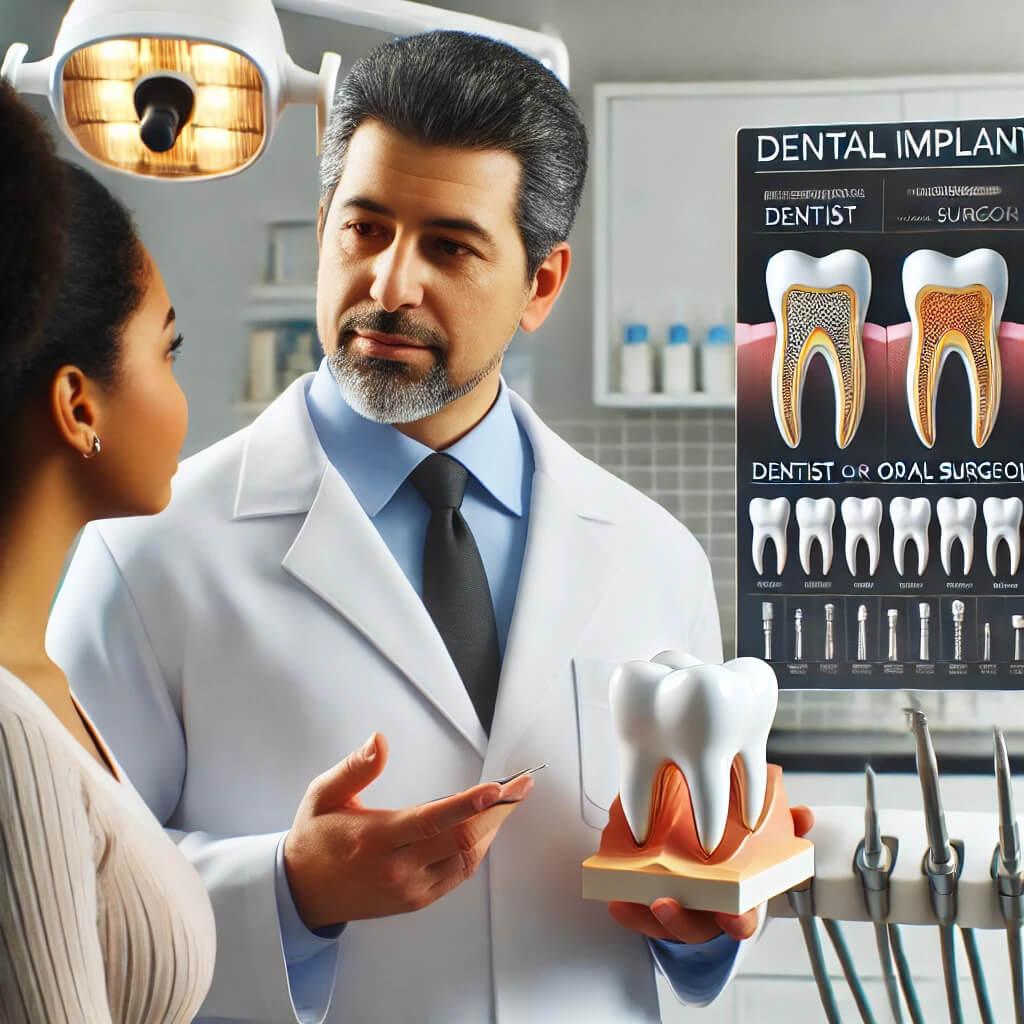
If you’re considering dental implants, you might be wondering whether it’s best to go to a dentist or an oral surgeon.
In this article, we’ll explore the differences between these professionals, the specific challenges each can address, and which option might be best suited for your dental implant needs.
By the end, you’ll have a clear understanding of the roles of dentists and oral surgeons in dental implant procedures, the qualifications and expertise they bring to the table, and how to make an informed decision based on your specific oral health situation.
Table of Contents
Dental Implants Dentist Or Oral Surgeon
How Do Dental Implants Work?
Dental implants work by placing a titanium post into the jawbone, which acts as an artificial tooth root. This post fuses with the bone through a process called osseointegration, providing a stable foundation.
After healing, an abutment is attached to the post, and a custom-made crown, bridge, or denture is placed on top. This process ensures implants look, feel, and function like natural teeth, with a success rate of about 95% .
| Step | Description |
| Initial Consultation | Assessment of oral health, bone density, and suitability for implants. |
| Implant Placement | Surgical insertion of a titanium post into the jawbone. |
| Healing and Osseointegration | Bone grows around the implant, securing it in place (3-6 months). |
| Abutment Placement | Connector piece attached to the implant post. |
| Crown Placement | Custom-made crown attached to the abutment, completing the restoration. |
Recommended Reading: What are the 3 Stages Of Dental Implants
How to Know if You Need Dental Implants?
You might need dental implants if you have one or more missing teeth, your dentures are uncomfortable, or you have difficulty chewing.
Dental implants are ideal for those with healthy gums and adequate bone to support the implant.
Approximately 69% of adults aged 35-44 have lost at least one permanent tooth, highlighting the common need for implants.
Consult with a dental professional to determine your suitability based on your oral health and specific needs.
| Indicator | Description |
| Missing Teeth | One or more teeth missing, affecting function and appearance. |
| Uncomfortable Dentures | Dentures causing discomfort, slipping, or sore spots. |
| Difficulty Chewing or Speaking | Trouble chewing food properly or speaking clearly due to missing teeth. |
| Adequate Bone Density | Sufficient bone in the jaw to support an implant; determined by a dental professional. |
| Healthy Gums | Gums in good condition, free from periodontal disease. |
| Long-term Tooth Replacement Needed | Seeking a permanent solution with a high success rate (around 95%) for missing teeth. |
Full check-up with a full set of X-rays
- Cannot be combined with other coupons or promotions
- Only on full priced items
What is an Oral Surgeon?
An oral surgeon is a dental specialist who performs surgical procedures on the mouth, jaws, and face. They handle complex extractions, corrective jaw surgeries, and dental implant placements.
How Do Oral Surgeons Work?
Oral surgeons are dental specialists trained to handle complex surgical procedures involving the mouth, jaws, and face. Their work encompasses a range of tasks that require specialized skills and knowledge.
| Aspect | Description |
| Pre-Surgical Evaluation | Thorough evaluations including medical history reviews and imaging tests like X-rays or CT scans to plan the surgery accurately. |
| Surgical Procedures | Performing surgeries such as wisdom tooth extractions, dental implants, corrective jaw surgery, and treatment of facial trauma. |
| Anesthesia and Sedation | Administration of local anesthesia, IV sedation, and general anesthesia to ensure patient comfort and pain-free procedures. |
| Post-Surgical Care | Providing detailed aftercare instructions and follow-up appointments to monitor healing and address any complications. |
Recommended Reading: Are Dental Implants Permanent or Removable
How to Know if You Need an Oral Surgeon?
You may need an oral surgeon if you have impacted teeth, require dental implants, suffer from facial trauma, have a misaligned jaw, or need removal of abnormal growths.
Oral surgeons handle complex dental issues requiring surgical intervention. For instance, impacted wisdom teeth often necessitate removal by an oral surgeon to prevent pain and infection.
Similarly, facial trauma from accidents may require surgical expertise for proper healing and reconstruction .
| Condition | Reason for Referral |
| Impacted Teeth | Requires surgical removal of teeth not properly erupted. |
| Missing Teeth | Dental implant placement requires precision and potential bone augmentation. |
| Facial Trauma | Surgical expertise needed for repairing broken jaws and severe facial cuts. |
| Misaligned Jaw | Orthognathic surgery to correct bite issues and improve jaw alignment. |
| Abnormal Growths | Surgical removal and biopsy of cysts, tumors, and other pathological conditions. |
Full check-up, professional cleaning and a full set of X-rays
- Cannot be combined with other coupons or promotions
- Only on full priced items
Difference Between Dental Implants and Oral Surgeon
Dental implants are prosthetic devices used to replace missing teeth, typically made of titanium, with a success rate of up to 98% according to the American Academy of Implant Dentistry.
Oral surgeons, on the other hand, are specialists trained to perform complex surgical procedures, including tooth extractions, corrective jaw surgery, and treatment of facial trauma.
| Aspect | Dental Implants | Oral Surgeons |
| Primary Function | Replace missing teeth | Perform complex dental surgeries |
| Training | General dental training, possibly with additional implantology courses | Specialized surgical training, including residency |
| Procedures | Implant placement, restoration | Extractions, corrective jaw surgery, trauma treatment, complex implant cases |
| Success Rate | Up to 98% success rate | Varies by procedure, generally high success rates for surgeries |
| Cost | $3,000 to $5,000 per tooth | Varies widely, often covered by insurance for medical necessity |
| When Needed | Tooth replacement | Complex cases requiring surgical intervention |
Recommended Reading: All On 4 Dental Implants vs Dentures
Pros and Cons of Dental Implants vs Oral Surgeon
| Aspect | Dental Implants | Oral Surgeon |
| Pros | – Permanent solution for tooth loss. – Preserves jawbone integrity. | – Specializes in complex oral surgeries. – Expert in bone reconstruction and corrective surgery. |
| Cons | – Requires surgical procedure. – Higher initial cost. – Potential risk of infection or failure. | – Not always necessary for simple implant placements. – Can be more invasive and costly for complex cases. |
Recommended Reading: Tooth Implant vs Dental Bridge
Average Price of Dental Implants in Kendall, Miami
Generally, the cost for a single dental implant ranges from $3,000 to $5,000. This includes the implant, abutment, and crown.
- Single Implant: $3,000 – $5,000
- Multiple Implants: Costs can rise significantly if multiple implants are needed, potentially reaching $25,000 or more for full mouth reconstruction.
- Additional Procedures: Procedures like bone grafting or sinus lifts, if required, can add $500 to $2,000 to the overall cost.
Insurance coverage and financing options can also impact the out-of-pocket expenses. It’s essential to consult with local dental professionals to get precise estimates tailored to individual needs.
Average Price of an Oral Surgeon in Kendall, Miami
The average cost for services provided by oral surgeons in Kendall, Miami, can vary widely depending on the specific procedure and its complexity. Here are approximate ranges for common oral surgery procedures:
- Simple Tooth Extraction: Typically ranges from $150 to $400 per tooth.
- Surgical Tooth Extraction: Can range from $200 to $600 or more per tooth, depending on the complexity.
- Wisdom Teeth Removal: Costs vary widely but can range from $300 to $2,500 per tooth, depending on whether the tooth is impacted and the complexity of the extraction.
- Dental Implant Placement: This can vary significantly based on the number of implants and the need for additional procedures like bone grafting or sinus lifts.
Costs can range from $1,500 to $3,000 per implant or more.
Key Takeaways: Dental Implants vs Oral Surgeon
Dental Implants:
- Permanent Solution: Dental implants offer a long-term solution for tooth replacement, mimicking the natural tooth structure.
- Preservation of Bone Health: They help preserve jawbone density and structure, which can deteriorate after tooth loss.
- Versatility: Suitable for various dental conditions from single tooth replacements to full mouth restorations.
Oral Surgeon:
- Specialized Expertise: Oral surgeons specialize in complex surgical procedures involving the mouth, jaws, and facial structures.
- Treatment of Complex Cases: They handle cases that require advanced surgical techniques like bone grafting, jaw reconstruction, and corrective surgeries.
- Comprehensive Care: Provide thorough diagnosis, treatment planning, and post-operative care for patients with severe dental issues.
Dental implants from Artistics Smile are ideal for stable, long-term tooth replacement, while oral surgeons excel in handling complex surgeries and specialized treatments.
Consultation or 2nd opinion
- Cannot be combined with other coupons or promotions
- Only on full priced items
Conclusion:Oral Surgeon vs Dental Implants
Dental implants offer a permanent solution for tooth loss, preserving jawbone integrity, albeit with an initial surgical procedure and potentially higher costs.
Oral surgeons, on the other hand, specialize in complex oral surgeries and bone reconstruction, ideal for more complicated cases requiring invasive interventions.
If you’re in need of Dental Implants in Miami ,consider visiting us at Artistic Smiles Miami Dentist. We´ve +25 years of experience, +60 positive reviews and over 30,000 satisfied patients.
Contact Us! We’ll be in touch with you in less than 10 minutes.
FAQs:Dental Implants vs Oral Surgeon
Are dental implants better than normal teeth?
Dental implants offer advantages like durability and stability, but they’re not inherently “better” than natural teeth. They can’t develop cavities, but require maintenance and care like regular brushing, flossing, and professional cleanings.